Aar Aiyy Teaching · People of the Middle World

САХА

Code of Honor
«Сахалыы сиэр-туом, чиэс уонна билии»

A people who brought the horse and fire to the land of eternal permafrost, beneath the White Sun of Orto Doidu. Nine commandments born of the Aiyy faith, the Olonkho epic and the teaching of the soul — Kut-Sür.

Descend the world axis
Who the Sakha are

The northernmost Turkic people on Earth

The Sakha (Yakuts) are the indigenous people of Yakutia, the largest region of Russia, sprawling across 3 million km² along the great Lena River. Their ancestors — Turkic horse-breeders of the Baikal region — migrated north in the 13th–15th centuries and achieved the impossible: they preserved cattle- and horse-breeding where winter plunges to −60 °C and the earth never thaws.

From a steppe culture they forged a culture of cold — and never lost their Turkic soul: an ancient language, a heroic epic, and a faith in the harmony of human and cosmos.

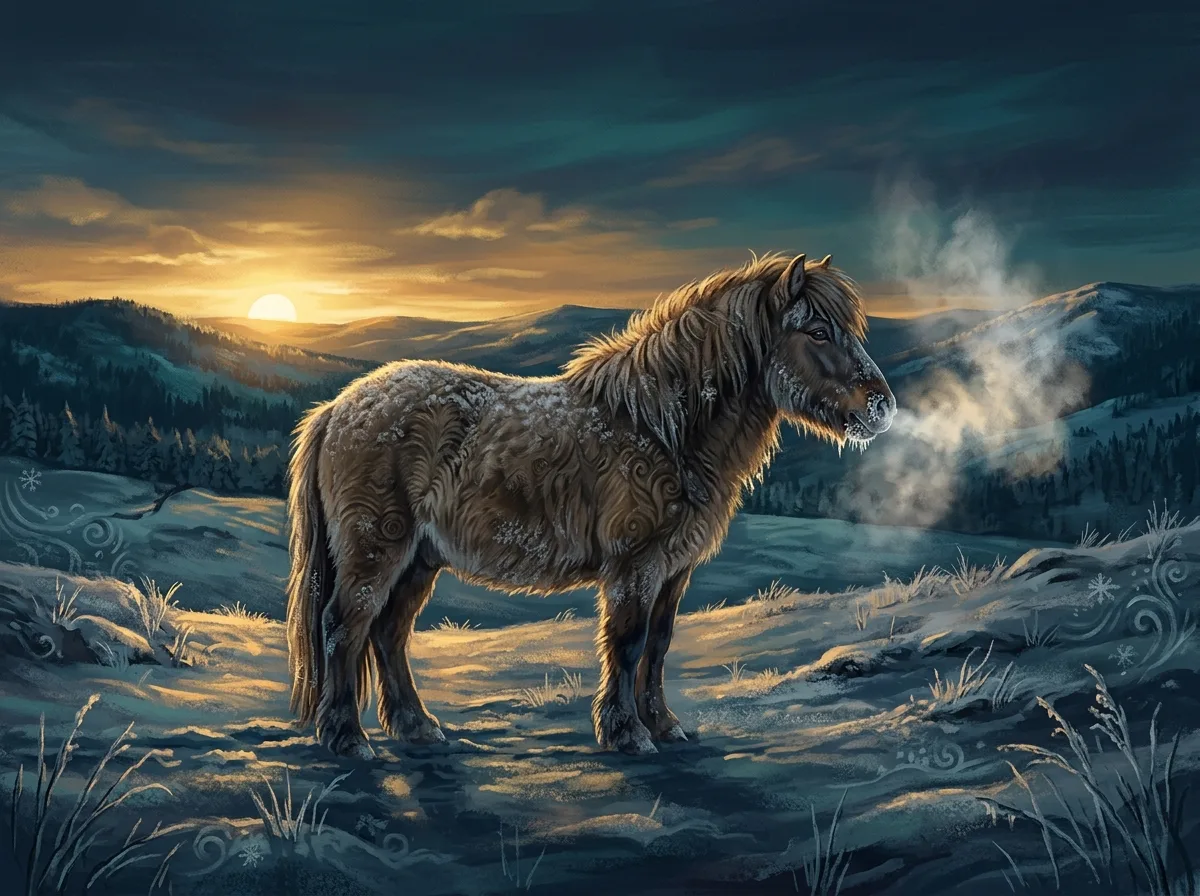
A Yakutian horse on the winter steppe at dawn
~480kspeakers of the Sakha language
3 million km²the land of Olonkho, the size of India
−60 °Cthe winter they tamed
36,000lines of the epic "Nurgun Bootur"
Toğus Yyaakh · Nine commandments

The Sakha Code of Honor

Nine is the sacred number of the Sakha people. These nine commandments are drawn from living ideas of the culture: the Aiyy faith, the sacred word кэс тыл, the purity of the soul кут, and a responsibility toward seven generations of descendants.

I
Айылҕаны харыстаа

Honor nature as a mother

Humankind is not the master of the world but only a part of Orto Doidu, the Middle World. Take from the land exactly as much as you need, and thank the iccí spirits for all that you take.

II
Кэс тылы тут

Keep your word

Kes tyl is the binding word. A promise once spoken is sacred and unbreakable. A person's name is worth exactly as much as the weight of their given word.

III
Кутгун ыраас тут

Keep your soul pure

Bright thoughts draw the forces of creation; dark ones breed destruction. Radiate kindness and gratitude: your kut is your light across the three worlds.

IV
Аҕа саастааҕы ытыктаа

Honor your elders and ancestors

Through the iyä-kut the wisdom of the clan has come to you. Heed your elders, remember your ancestors — the thread of the generations must not break at you.

V
Ыалдьыты көрс

Welcome a guest with warmth

In the land of frost a guest is sacred. Share the fire of the hearth and the choron of kumys: by sheltering one in the cold you save them, and you raise yourself up.

VI
Боотур быһыылаах буол

Be valiant, like a bootur

Like Nurgun Bootur, defend the weak and do not yield before evil — the abaahy. Courage without cruelty, strength in the service of justice.

VII
Үлэни таптаа

Love labor

The smith, the horse-breeder, the craftsman and the storyteller are all honored. Idleness shames the clan, while skilled hands — сатабыл — feed the family and warm the winter.

VIII
Удьуоргун өйдөө

Remember your descendants

Every deed echoes through seven generations. Live so that the trace you leave in the clan is bright, and your name kind on the lips of grandchildren not yet born.

IX
Эйэни тутус

Keep peace and unity

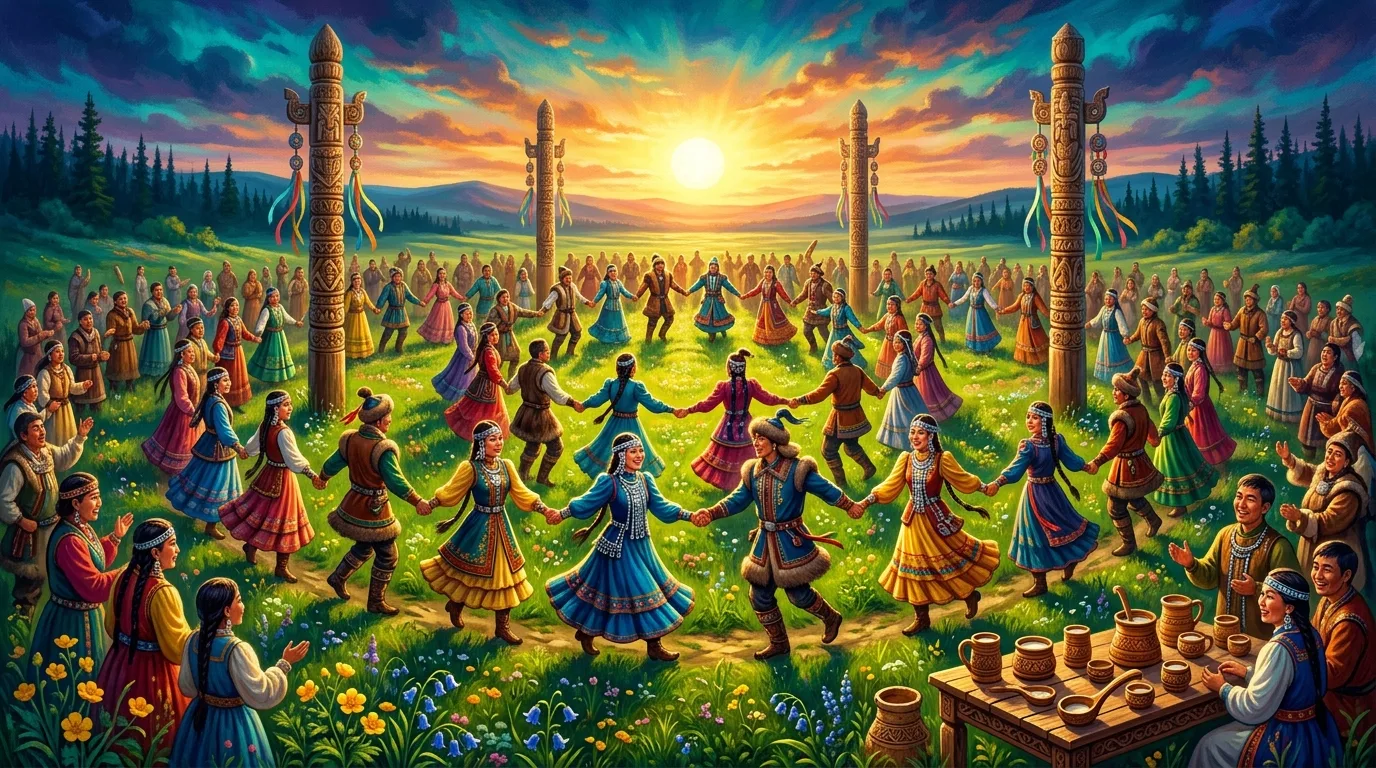
Like the circle of the osuokhai dance, which moves with the sun, hold to harmony. Discord tears the circle; the unity of clan and people is life itself.

Olonkho · A UNESCO masterpiece

An epic sung across two consecutive nights

"Nurgun Bootur the Swift" —
a hero sent by the Aiyy gods to defend
the Middle World from the dark.
  • 36,000 lines — the largest of the Yakut olonkho, recorded by Platon Oyunsky.
  • 2005 — UNESCO proclaims Olonkho a masterpiece of the oral and intangible heritage of humanity.
  • The olonkhosut — the storyteller who, alone, carries the tale for 8–10 hours, voicing all the heroes and spirits.
  • Three worlds — the Upper (the gods), the Middle (humankind), the Lower (the abaahy) — the whole Sakha universe fits into a single song.
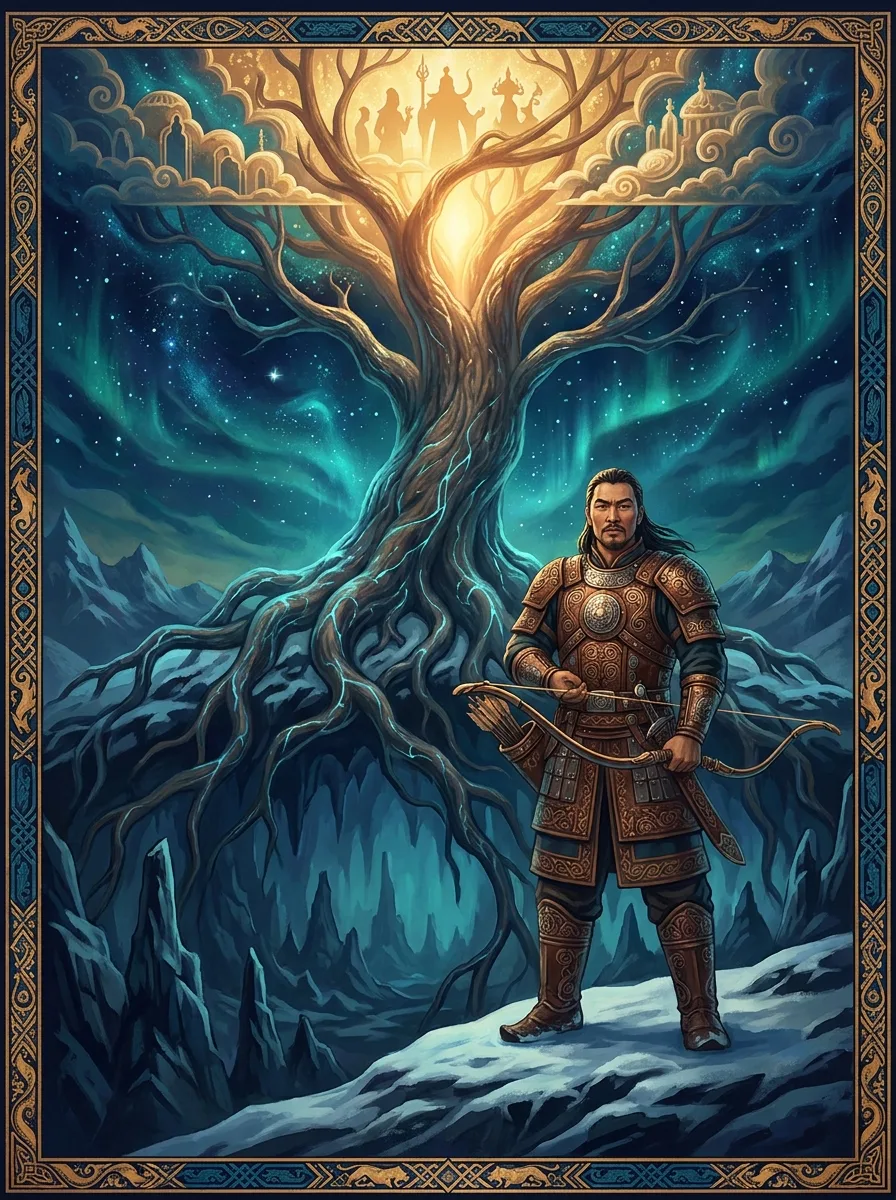
The hero-bootur Nurgun before the World Tree Aal Luuk Mas
The world of Olonkho · A long read

The Universe of Olonkho

To understand the Sakha, you must enter their epic. Olonkho is not a bedtime tale but an entire model of the cosmos: cosmogony, a moral law and the memory of a people, sung in a single voice through the dark of the long northern night.

Three tales of the world's beginning

Olonkho is the common name for dozens of heroic tales, and together they form a single chronicle of creation. The first tell how the bright deities айыы of the Upper World created Orto Doidu — the Middle Land of humankind. The second recount how the heaven-cast exile Эр-Соготох, the Lone Man, descended to the earth and gave rise to the human race. The third — the most beloved — tell how the warriors of the Middle World waged war against the abaasy demons of the Lower World.

The universe of the olonkho has three tiers, and all three worlds are pierced by the great Tree of Life Аал Луук Мас: its roots reach down into the underworld, its crown touches the ninth heaven. The Lower World fell to the youngest of three brothers, Arsan Duolai; his thirty-six tribes of abaasy monsters are the embodiment of every vice: malice, greed, lust and vengeance.

The anatomy of the tale

Almost every olonkho is built upon a great canon. It opens with a solemn praise of the hero's wondrous land — its mountains, rivers and pastures. Then the abaasy fall upon the uluses of the aiyy and carry off the warrior's sister or bride — and from that moment the journey begins.

The hero — one such as Нюргун Боотур Стремительный — arms himself for the road, and his mighty steed bears him to the edge of the universe. To rescue the captured maiden, he descends into the Lower World and meets in single combat the mightiest of the warriors of darkness — the fiery serpent Уот Усутаакы. Victorious, he frees the languishing captives and the sun-maiden Туйаарыма Куо, and returns home — and the tale is crowned by a wedding feast and a peace established upon the earth.

The three worlds of the olonkho

  • Үөһээ дойду — the Upper World, the nine heavens, the throne of the bright aiyy.
  • Орто дойду — the Middle World, the land of humankind and its hero-defenders.
  • Аллараа дойду — the Lower World, the abyss of the abaasy demons.
  • Аал Луук Мас — the World Tree, the axis of the universe that binds all three.
A single storyteller becomes a whole world —
and a god, a hero, and a monster.

The voice of the olonkhosut

Olonkho was never written down — it was sung. The олонхосут, the storyteller, alone and without a single instrument, carried the tale for 8–10 hours on end, over two evenings in a row. The tale alternates recitative narration and song: the storytelling flows in a rapid patter, while the heroes' direct speech is sung.

In each olonkho there live 10–20 characters, and each has its own unchanging melody. The bright warriors and guardian spirits sing in a solemn, flowing chant — дьиэрэтии ырыа — adorned with a special throat-overtone, the кылысах, like an echo of the heavens themselves. The abaasy, meanwhile, rasp and growl in a harsh, clipped patter. By legend, the longest of the tales were sung by the masters without pause for seven days and seven nights.

From the campfire to the world stage

In the 20th century the poet Платон Ойунский gathered from many variants and recorded "Nurgun Bootur the Swift" — 36,000 lines, the largest of the Yakut olonkho. And in 2005 UNESCO proclaimed Olonkho a masterpiece of the oral and intangible heritage of humanity — the voice of the Sakha was heard by all the world.

Today the Театр Олонхо works in Yakutsk, a new generation of olonkhosuts is growing, and the ancient song of dark and light rings out again — now from the stage, yet as alive as ever.
Aar Aiyy · The bright deities

The Pantheon of the Aiyy

The Sakha have no single creator god. There are the айыы — bright deities who do not create but govern destinies and guard the Middle World. The elders feared to anger them more than the abaasy demons themselves.

Lord of the Upper World
Үрүҥ Аар Тойон

The White Creating Lord

The supreme deity, the embodiment of the sun and the sky. He dwells on the ninth heaven — in a land without winter, where white grass grows. Not a creator, but the steward of human destinies.

Patron of horses
Дьөһөгөй Тойон

The Stallion God

The giver of horses and cattle, the multiplier of herds. His thunderous neigh is the thunder of the heavens. To him is dedicated the people's chief festival — Ysyakh.

Goddess of birth
Айыыһыт

The Giver of the Soul

Patroness of women in childbirth and of the continuation of the clan. It is she who brings the infant its кут — its soul — and guards the thread of the generations.

Protector of humankind
Иэйиэхсит

Keeper of Blessing

The goddess who watches over happiness and plenty. Through her the soul descends from the branches of the World Tree to the human being — and keeps the bond with the Upper World.

Spirit of the taiga
Баай Байанай

The Merry Master of the Forest

The spirit of the hunt and the taiga, granting fortune to the hunter. With him one shares the first catch and does not raise one's voice in the forest — the forest hears everything.

Mistress of the Earth
Аан Алахчын

Mother of the Middle World

The spirit-mistress of the earth, dwelling in the sacred Tree Aal Luuk Mas. The nurturer of all that lives, to whom one turns with the blessing-algys before beginning any undertaking.

Kut-Sür · The teaching of the soul

The three kut of a human being

By the philosophy of the Sakha, a human being is woven of three souls. Above them stands сүр, the life-force and character. To lose one's kut-sür is to lose oneself.

Буор кут

The Earth Soul

The body and matter, flesh made of earth. It is born first and is the first to return to the earth.

Ийэ кут

The Mother Soul

The inheritance of the clan — traditions, culture and ancestral memory, handed down from the mother and the forebears.

Салгын кут

The Air Soul

Reason and speech. It enters the human being with the first cry upon the green grass — a gift of the Upper World.

Üges · Living traditions

The soul of a people in its rites

Once a year, on the day of the summer solstice, the steppe comes alive with the Ysyakh festival — the meeting of summer, the blessing of nature and the union of the clan.

Ыһыах

The Ysyakh Festival

The New Year of the Sakha people: the drinking of kumys, the algys blessing, white food and the greeting of the Sun.

Осуохай

The Circular Dance

A round-dance of unity: people move with the sun, merging into one living circle of clan and people.

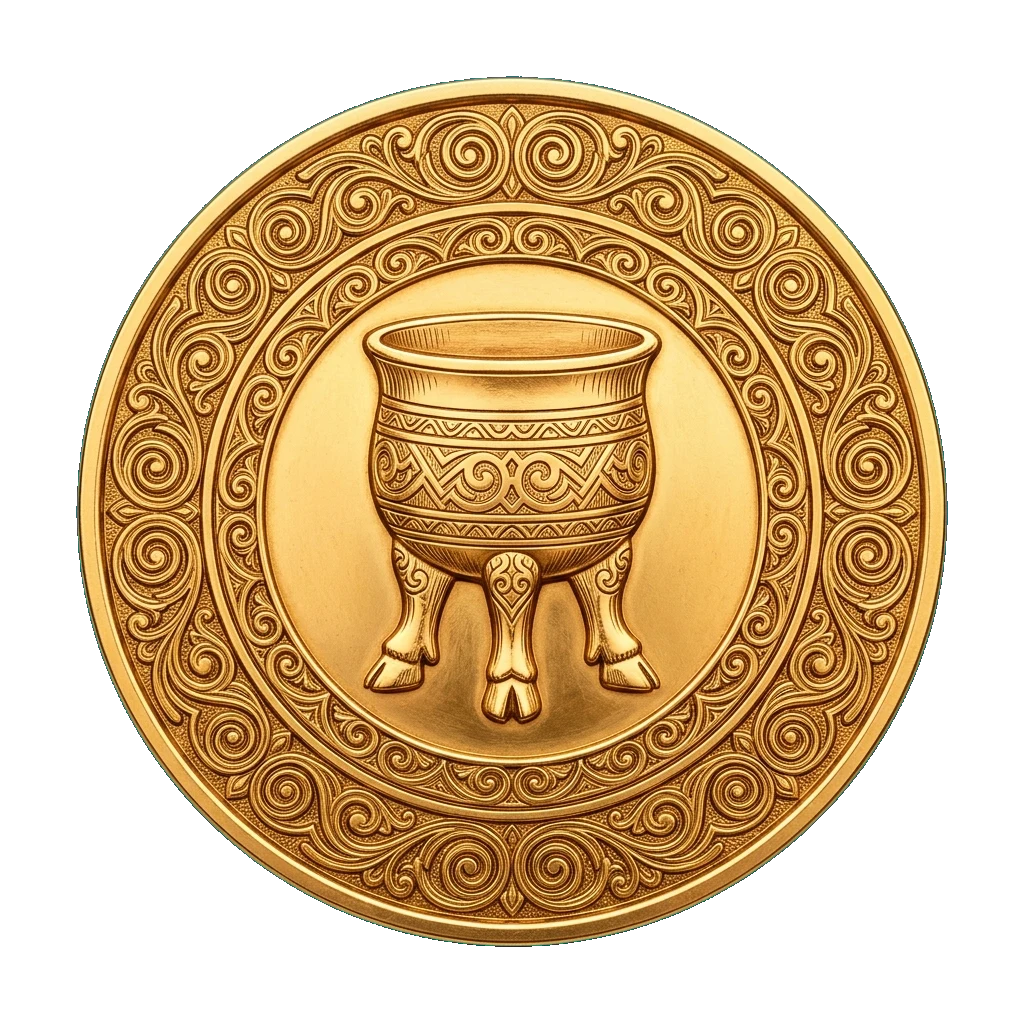
Чороон

The Kumys Vessel

A carved wooden goblet on legs — the sacred cup from which kumys is drunk at the rites.

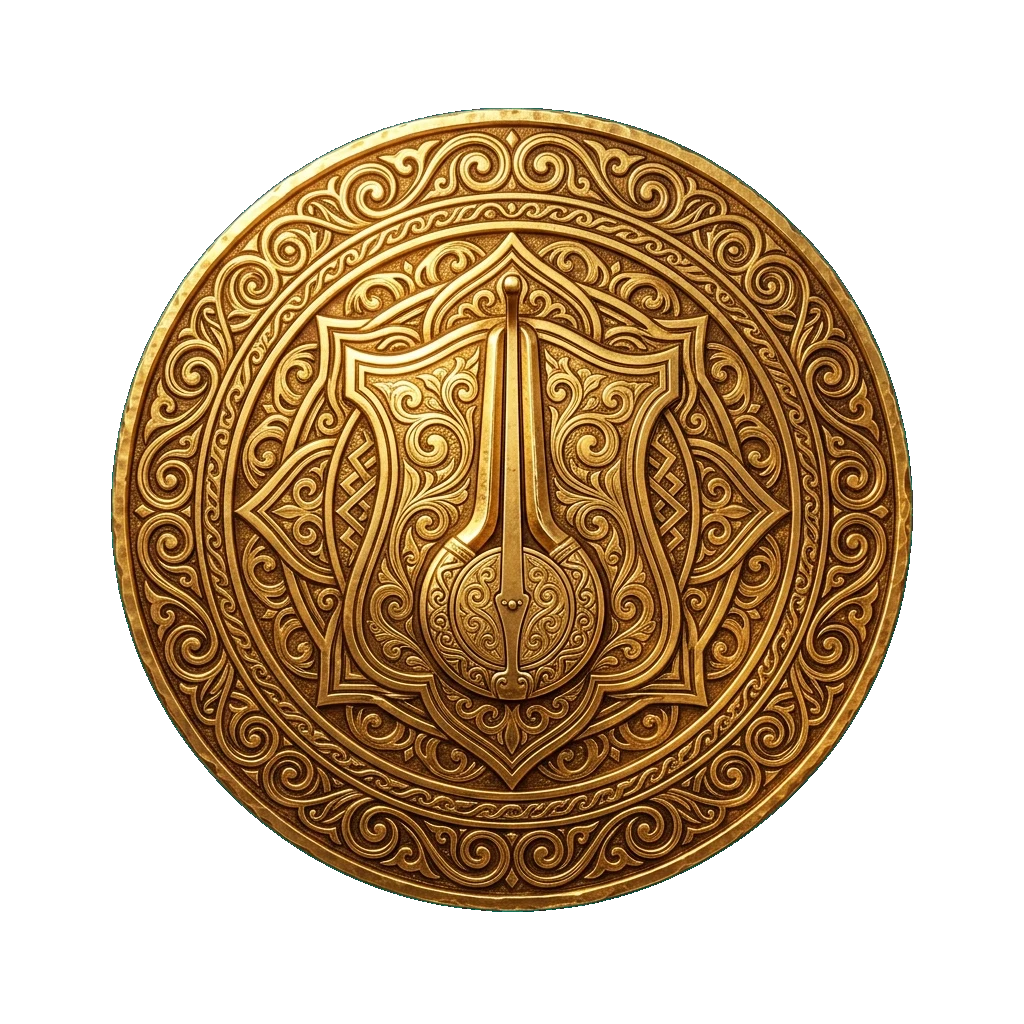
Хомус

The Jew's Harp

The Yakut khomus — the voice of the wind and the shaman. Yakutia is one of the world's great centers of khomus music.

Сэргэ — the carved hitching post — is for the Sakha a symbol of the World Tree and the axis of the universe. To set up a serge is to root a family in the Middle World.

Sakha tyla · Language

The most ancient of the Turkic tongues

Sakha tyla has preserved archaic features of the Turkic languages — its isolation in the far north kept them intact. In it lies a stratum of Turkic foundation, many Mongolian, Evenki and Russian words, and even echoes of Sanskrit.

In 1917 Semyon Novgorodov created the Yakut alphabet on the basis of phonetic transcription. Today its writing is Cyrillic plus five special letters and two digraphs.

ҔҤӨҺҮ ДьНь
Үтүө күнүнэн!
Good day! — a greeting
Махтал
Thank you / gratitude
Аан дойду
The world, the universe (lit. "the primordial world")
Сахалыы
In Yakut, in the manner of the Sakha
Доҕор
Friend, companion
Эйэ
Peace, accord, harmony

The Novgorodov Script · the alphabet of 1917

Semyon Novgorodov set down Sakha on the basis of the International Phonetic Alphabet — without capital letters or diacritics, strictly by sound. Here are the authentic Sakha words from this page in Cyrillic and in Novgorodov's phonetic script.

aeiɔøuyɯ bgʁhɟkql ʎmnŋɲprstcj
Сахаsaqa
Айыыajɯː
Олоҥхоɔlɔŋqɔ
Кэс тылkes tɯl
Кут-сүрkut-syr
Ыһыахɯhɯaq
Дьөһөгөйɟøhøgøj
Эйэeje

Switch the script — and every Sakha word on the page will be shown in Novgorodov's Latin letters. This is a transliteration of the authentic words only, with no invented translation.

Ustuoruiya · The path of a people

The road to the north

From the steppe herds of the Xiongnu to the diamond capital of the North — two thousand years of journeying. Here are the milestones on which the Sakha people was born and tempered.

The Xiongnu era

The birth of the language

The proto-Turkic speech of the Sakha ancestors takes shape in deep antiquity and, preserved by the North, keeps archaic features lost to the other Turkic peoples.

13th–15th c.

The great migration

Fleeing the wars of the age of Genghis Khan, Turkic horse-breeders leave the Baikal region for the Lena. The legendary first ancestors Omogoy Baay and Elley Bootur settle the Tuymaada valley. Elley founds the Ysyakh festival and is the first to raise the algys to the Aiyy.

late 16th – early 17th c.

Tygyn Darkhan

The toyon of the Khangalas people, hero of countless legends and a real historical figure. The first ruler of all-Yakut scale: he united his own and the neighboring uluses — the "Yakut king" of the age before the coming of the Russians.

1632

The Lensky stockade

The Cossack Pyotr Beketov raises a stockade on the Lena — the future Yakutsk. This date is regarded as the entry of Yakutia into the Russian state.

17th–18th c.

The people of the alases

The classic Sakha culture takes form: horse- and cattle-breeding on the alases, the smith's craft, the Aiyy faith and the flowering of the Olonkho epic.

turn of the 19th–20th c.

Alexey Kulakovsky

Thinker, poet and historian — the founder of Yakut written literature. With him begins a new, literary epoch of the Sakha word.

1917

The Novgorodov alphabet

Semyon Novgorodov creates the Yakut alphabet on the basis of phonetic transcription — the foundation of mass literacy and enlightenment.

27 April 1922

The Yakut ASSR

An autonomous republic is formed within the RSFSR — the first statehood of the Sakha people in modern times. To this day that date is the Day of the Republic.

1930s

Platon Oyunsky

The poet and scholar (1893–1938) brings together and records "Nurgun Bootur the Swift" — 36,000 lines. A founder of Soviet Yakut literature; he perished in the repressions and was rehabilitated posthumously.

13 June 1955

The diamonds of "Mir"

Geologists find a kimberlite pipe and send the famous radiogram: "Lit the pipe of peace, the tobacco is excellent." Yakutia becomes the country's diamond treasury.

1990–1991

The Republic of Sakha (Yakutia)

On 27 September 1990 sovereignty is proclaimed, and in 1991 the republic takes its modern name — Sakha, the people's own name for itself, sounding as the name of the land.

2005

Olonkho — heritage of humanity

UNESCO proclaims the Yakut heroic epic a masterpiece of oral intangible heritage. The voice of the Sakha is heard by all the world.

Kes tyl · The binding word
Honor nature. Keep your word. Guard your kut.
«Айыы аартыгынан, Күн сирин үрдүнэн»

By the path of the Aiyy gods, beneath the Sun of the earth

Тыл · Language
РусскийRU EnglishEN 中文ZH EspañolES हिन्दीHI العربيةAR FrançaisFR PortuguêsPT DeutschDE 日本語JA TürkçeTR